A stroke changes walking in a way most mobility aid guides do not address. The problem is rarely both legs. It is one side. Hemiplegia or hemiparesis leaves one arm and one leg weaker, which means the usual advice to use a pair of crutches often does not apply to you at all. Your strong side has to do the supporting, and your aid has to work with a body that is no longer symmetrical.
Here is the encouraging reality. Most people who have a stroke regain the ability to walk, often with a slower, more careful gait and the right support. The aid you use is part of relearning to move safely, and getting it matched to your specific recovery makes a real difference in your confidence and your fall risk.
This guide covers what mobility aids actually fit one-sided weakness, where a single crutch fits in, the role of bracing, and how to rebuild walking safely with your therapy team.
This works alongside your rehab, not instead of it. Our guide on when to change or add a mobility aid and the piece on walking safely indoors and out are useful companions.
The honest answer about crutches and one-sided weakness
Let us be straight, because this matters for safety. A standard pair of crutches usually is not the right tool after a stroke, because using two crutches well takes two reasonably strong arms, and hemiplegia takes one of yours out of the equation. Forcing a pair can be unsafe.
What most people with one-sided weakness use is a single aid, held in the stronger hand, on the opposite side from the weak leg. That can be a cane, a quad cane, a hemi-walker, or a single forearm crutch. A single forearm crutch is worth knowing about, because it offers more support and a more secure connection than a simple cane while still being a one-handed aid. The right choice depends on your balance and strength, which is exactly the kind of thing your physical therapist will assess and test with you.
Matching the aid to your recovery
Recovery after a stroke is not one-size, and neither is the aid. The general logic goes like this, and your therapist will fine-tune it.
If your balance is fairly good
A single-point cane or a single forearm crutch in the stronger hand often works well. A forearm crutch gives a bit more stability than a cane while keeping your hand free to release and grab a railing.
If your balance is unreliable
A wider base helps. A quad cane, a hemi-walker, or a rollator gives more stability than a single-point aid, and for people with poorer balance the steadier option is often the safer and less tiring choice. Stability comes first here, even if the aid is bulkier.
Aids are not permanent verdicts. Many stroke survivors step down from a more supportive aid to a lighter one as strength and balance return. Progressing your equipment as you progress is a normal and good part of recovery.
The role of bracing
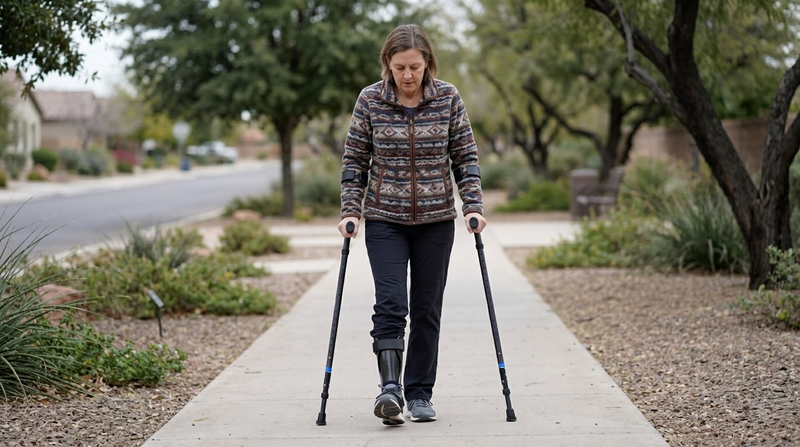
One-sided weakness often comes with foot drop, where the weak ankle cannot lift the foot, so the toe catches and trips you. An ankle-foot orthosis, a brace that holds the foot in a safe position, is a common and effective partner to a walking aid. The brace handles the foot, the aid handles balance and support, and together they make walking safer than either does alone. If you are tripping on your weak side, ask your team about bracing.
Rebuilding walking safely
Relearning to walk after a stroke is real work, and a few principles keep it safe and moving forward.
- Let your therapy team lead. The specific aid, the technique, and the progression should come from people who can see your gait and test your balance. This is not a guess-at-home situation.
- Aid in the stronger hand, opposite the weak leg. This is the standard pattern for one-sided weakness, and it gives you the most stable, symmetric gait.
- Go slow and use railings. A stroke gait is more careful by necessity, and rushing is how falls happen. Slower is safer and still counts as progress.
- Practice the transitions. Standing up, sitting down, and turning are higher-risk moments, so rehearse them with support until they feel solid.
Where a forearm crutch fits
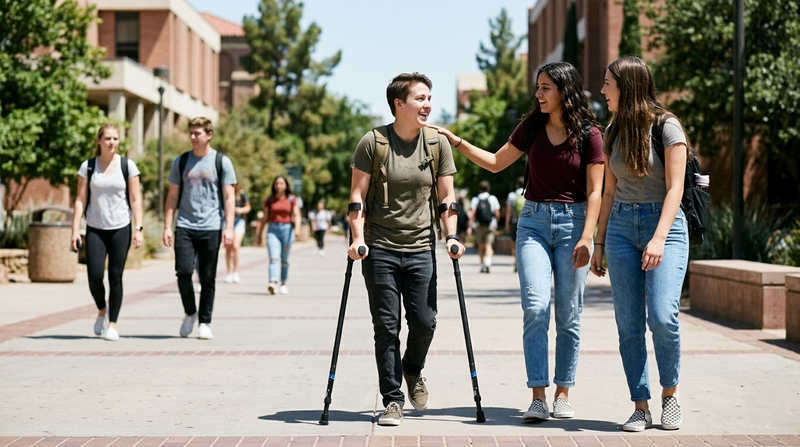
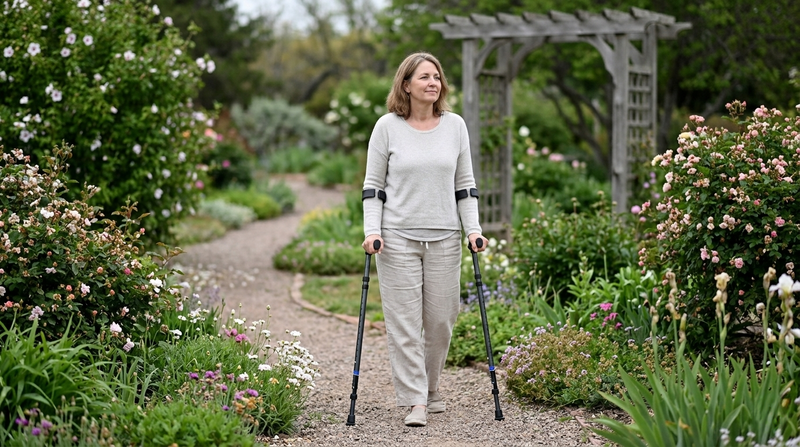
If your team decides a single forearm crutch suits your balance, the quality of that crutch matters, because it is bearing real weight on your one working side all day. Peak axial force through a single crutch has been measured at roughly 45 percent of body weight during normal crutch gait, and with only one working arm, all of that lands in one place. The In-Motion Pro forearm crutch is built for that: molded V-shaped forearm cuffs that spread contact, angled and contoured grips that hold the wrist in a natural position, a spring-assisted lower post that softens each impact, and a weight of 1.8 lbs per crutch. Used as a single aid in the stronger hand, it can offer secure support without punishing the hand you are now relying on. See the options at the In-Motion shop, and choose with your therapist's guidance.
When to call your doctor right away
Two categories matter here. Stroke warning signs are always an emergency, and a few crutch-related issues need prompt attention.
- Any sign of a new or recurring stroke is a 911 emergency. Sudden face drooping, arm weakness, or slurred speech means call for help immediately. Acting fast saves brain.
- New falls or a sharp increase in near-falls, which usually means the aid no longer matches your balance and needs to be reassessed.
- Numbness or tingling in the working hand, which can mean the crutch is loading a nerve and the fit needs adjusting.
- A calf that is swollen, red, warm, or painful, or sudden shortness of breath or chest pain, which can signal a blood clot and is a medical emergency.
The bottom line
Stroke recovery is about rebuilding walking on a body that is no longer symmetrical, so the usual crutch advice does not fit. Most people with one-sided weakness use a single aid in the stronger hand, often paired with a brace for foot drop, and a single forearm crutch is one solid option when balance allows.
Lean on your therapy team, progress your equipment as you regain strength, and give yourself credit for hard work. A slower, steadier walk is still walking, and most stroke survivors get there.
Frequently asked questions
Can you use crutches after a stroke?
Usually not a standard pair, because using two crutches well takes two strong arms and a stroke often weakens one side. Most people with one-sided weakness use a single aid in the stronger hand, such as a cane, quad cane, hemi-walker, or a single forearm crutch. Your physical therapist will match the aid to your balance.
Which hand should I hold my walking aid in after a stroke?
The stronger hand, on the opposite side from your weaker leg. This is the standard pattern for one-sided weakness and gives the most stable, symmetric gait. Your therapy team will confirm it for your situation and coach the technique.
Is a cane or a forearm crutch better after a stroke?
It depends on your balance. With good balance, a single-point cane or a single forearm crutch in the stronger hand often works well, and a forearm crutch gives a bit more support than a cane. With unreliable balance, a wider-based aid like a quad cane or hemi-walker is usually safer. A therapist assessment is the best guide.
What about foot drop on my weak side?
Foot drop is common after a stroke and makes the toe catch and trip you. An ankle-foot orthosis, a brace that holds the foot in a safe position, is a common and effective partner to a walking aid. The brace manages the foot while the aid manages balance. Ask your team if bracing would help you.
Will I always need a walking aid after a stroke?
Not necessarily. Most stroke survivors regain walking, and many step down from a more supportive aid to a lighter one, or off an aid entirely, as strength and balance return. Progressing your equipment as you recover is a normal and encouraging part of the process.