Living Visibly: Identity, Confidence, and Owning Your Mobility Aid

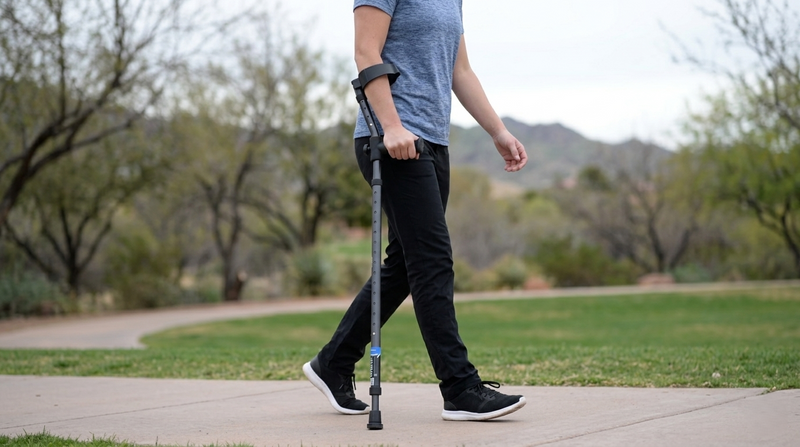
confident with crutches in motion forearm

There is a moment, somewhere along the way, when your crutches stop being the thing that happened to you and start being just part of how you move through the world. Getting to that moment is not automatic, and it is not about pretending everything is fine. It is about a shift in how you see the equipment and, underneath that, how you see yourself.

A lot of people spend the early stretch trying to make the aid as invisible as possible, hoping nobody notices. That is understandable, and it is exhausting. The turn happens when you stop apologizing for taking up space and start treating your crutches as ordinary equipment that lets you live your life. That is not a small thing. It is one of the most freeing shifts you can make.

This is a piece about that turn. The grief that often comes first, the reframe that helps, and the practical ways people grow into owning their mobility aid rather than hiding behind it.

This connects closely to handling stares and questions and to finding a community that gets it. Read those alongside this one.

The honest answer: acceptance usually starts with grief

Let us not skip the hard part. For a lot of people, needing a mobility aid brings a real sense of loss, especially if it followed an injury or a diagnosis that changed the plan. There can be grief for the body you had, or the future you pictured. Pretending that grief away does not work, and it is not a sign that you are handling things badly. It is a normal response to a real change.

Acceptance does not mean you are glad it happened. It means you stop fighting the reality of it and start building a good life on the ground you actually stand on. That shift tends to come in waves, not all at once, and the waves get gentler over time. Many people say the turn began the day they stopped seeing the aid as proof of what they lost and started seeing it as the tool that gave something back.

The reframe that changes everything

Language shapes how you feel, including the language you use in your own head. The same pair of crutches can be a symbol of defeat or a piece of equipment that buys you freedom, and which one it is depends largely on the story you tell about it.

Consider the reframe that long-term users come to on their own. A mobility aid is not what holds you back. It is what lets you go further, stay out longer, and do things that would otherwise cost too much or be off the table entirely. Seen that way, the crutches are not the opposite of independence. They are part of how you get it.

You do not have to force a sunny attitude you do not feel. But you can notice the story you are telling, and gently choose a truer one. The aid is on your side.

Making it yours

One of the quiet powers of owning a mobility aid is making it an extension of you rather than a hospital hand-me-down. Self-expression turns equipment you resent into gear you actually like, and that changes how you carry it.

  • Choose equipment you like the look and feel of. Color, finish, a grip that suits you. When the gear feels like yours, you stop trying to hide it.
  • Add the personal touches that make it yours, from a crutch bag you like to small customizations. These are not frivolous. They are how you reclaim the object.
  • Dress like yourself. Your style does not go away because you use crutches. Building outfits that work with the aid, instead of around it, is a small daily act of ownership.

Confidence is a practice, not a personality

Confident people are not born unbothered. They built it, usually through repetition, and you can too. Confidence around a mobility aid grows the same way any skill does, by doing the thing until it stops feeling like a performance.

  • Get genuinely good at the mechanics. Moving smoothly does more for your confidence than any pep talk, because competence and ease feed each other.
  • Go out and do ordinary things. Every coffee run and errand on your terms chips away at the self-consciousness until the world feels like yours again.
  • Find your people. Seeing others live full, visible lives with mobility aids rewires what you think is possible faster than anything you can tell yourself.

Representation matters, including yours

Part of what makes the early days hard is not seeing many people like you living boldly and visibly. That is changing, and you can be part of the change for the next person. You do not have to become an advocate or post your life online. Simply living fully and visibly, going where you want and refusing to shrink, tells every newly diagnosed person who sees you that a good life is available.

If you ever want to share your story, we would be honored to feature it. The real-life accounts on our community page exist because people decided their experience might help someone else, and you can submit yours here.

A note on the gear

It is easier to own something you are proud to be seen with. That is part of why long-term users tend to move on from the basic pair they were first handed to crutches that look and feel better and move with them. The In-Motion forearm crutch was designed for that upright, capable kind of movement, and you can see the options at the In-Motion shop. The gear is only one piece of identity, but liking what you use makes the owning easier.

When the inner work needs a guide

Growing into a new identity is real emotional work, and sometimes it needs more than time and a good attitude.

  • If grief settles into a persistent low mood, or you lose interest in things you used to love, that is worth talking to a professional about. Adjusting to disability is a known and treatable struggle.
  • If your self-talk has turned harsh and constant, a counselor can help you build a kinder and more accurate inner voice.

This is tender territory, and there is no prize for going it alone. If any of this resonates, please consider reaching out to a trusted person or a mental health professional. Asking for support is part of building the life you want, not a detour from it.

The bottom line

Owning your mobility aid is less about the crutches and more about the story you tell about yourself. The grief is real and it softens. The reframe, from symbol of loss to tool of freedom, is available whenever you are ready for it. And confidence is something you practice into being, one ordinary outing at a time.

You get to take up space. You get to be seen. The aid is not the end of the person you were. It is part of how the person you are keeps moving forward.

Frequently asked questions

Is it normal to grieve needing a mobility aid?

Yes, completely. Needing crutches can bring real grief for the body you had or the future you pictured, especially after an injury or diagnosis. That grief is a normal response to a real change, not a sign you are handling things badly. It tends to come in waves that gentle over time.

How do I stop feeling self-conscious about my crutches?

Confidence grows through practice, not willpower. Get genuinely good at moving so you feel at ease, do ordinary things in public until the self-consciousness wears down, and spend time around others who live visibly with mobility aids. Liking your equipment helps too, because you stop wanting to hide it.

How can changing how I talk about my crutches help?

The same crutches can be a symbol of defeat or a tool that buys freedom, and the story you tell shapes how you feel. Noticing your self-talk and gently choosing a truer story, that the aid lets you go further rather than holding you back, genuinely changes your experience of using it.

Should I customize or personalize my mobility aid?

If you want to, yes. Choosing equipment you like and adding personal touches turns a hospital hand-me-down into gear that feels like yours, which makes it far easier to own rather than hide. It is not frivolous, it is a real way to reclaim the object and feel like yourself.

I feel alone in this. What can help?

Connection helps more than almost anything. Seeing others live full, visible lives with mobility aids rewires what you believe is possible, and sharing your own story can help the next person. If the loneliness runs deep or feeds a persistent low mood, talking with a counselor is a good and worthwhile step.
Related recovery guides

0 comments

Leave a comment

Please note, comments need to be approved before they are published.

confident with crutches in motion forearm

Resource CenterTips/Tricks

Tips/Tricks

Living Visibly: Identity, Confidence, and Owning Your Mobility Aid

There is a moment, somewhere along the way, when your crutches stop being the thing that happened to you and start being just part of how you move through the world. Getting to that moment is not automatic, and it is not about pretending everything is fine. It is about a shift in how you see the equipment and, underneath that, how you see yourself.

A lot of people spend the early stretch trying to make the aid as invisible as possible, hoping nobody notices. That is understandable, and it is exhausting. The turn happens when you stop apologizing for taking up space and start treating your crutches as ordinary equipment that lets you live your life. That is not a small thing. It is one of the most freeing shifts you can make.

This is a piece about that turn. The grief that often comes first, the reframe that helps, and the practical ways people grow into owning their mobility aid rather than hiding behind it.

This connects closely to handling stares and questions and to finding a community that gets it. Read those alongside this one.

The honest answer: acceptance usually starts with grief

Let us not skip the hard part. For a lot of people, needing a mobility aid brings a real sense of loss, especially if it followed an injury or a diagnosis that changed the plan. There can be grief for the body you had, or the future you pictured. Pretending that grief away does not work, and it is not a sign that you are handling things badly. It is a normal response to a real change.

Acceptance does not mean you are glad it happened. It means you stop fighting the reality of it and start building a good life on the ground you actually stand on. That shift tends to come in waves, not all at once, and the waves get gentler over time. Many people say the turn began the day they stopped seeing the aid as proof of what they lost and started seeing it as the tool that gave something back.

The reframe that changes everything

Language shapes how you feel, including the language you use in your own head. The same pair of crutches can be a symbol of defeat or a piece of equipment that buys you freedom, and which one it is depends largely on the story you tell about it.

Consider the reframe that long-term users come to on their own. A mobility aid is not what holds you back. It is what lets you go further, stay out longer, and do things that would otherwise cost too much or be off the table entirely. Seen that way, the crutches are not the opposite of independence. They are part of how you get it.

You do not have to force a sunny attitude you do not feel. But you can notice the story you are telling, and gently choose a truer one. The aid is on your side.

Making it yours

One of the quiet powers of owning a mobility aid is making it an extension of you rather than a hospital hand-me-down. Self-expression turns equipment you resent into gear you actually like, and that changes how you carry it.

  • Choose equipment you like the look and feel of. Color, finish, a grip that suits you. When the gear feels like yours, you stop trying to hide it.
  • Add the personal touches that make it yours, from a crutch bag you like to small customizations. These are not frivolous. They are how you reclaim the object.
  • Dress like yourself. Your style does not go away because you use crutches. Building outfits that work with the aid, instead of around it, is a small daily act of ownership.

Confidence is a practice, not a personality

Confident people are not born unbothered. They built it, usually through repetition, and you can too. Confidence around a mobility aid grows the same way any skill does, by doing the thing until it stops feeling like a performance.

  • Get genuinely good at the mechanics. Moving smoothly does more for your confidence than any pep talk, because competence and ease feed each other.
  • Go out and do ordinary things. Every coffee run and errand on your terms chips away at the self-consciousness until the world feels like yours again.
  • Find your people. Seeing others live full, visible lives with mobility aids rewires what you think is possible faster than anything you can tell yourself.

Representation matters, including yours

Part of what makes the early days hard is not seeing many people like you living boldly and visibly. That is changing, and you can be part of the change for the next person. You do not have to become an advocate or post your life online. Simply living fully and visibly, going where you want and refusing to shrink, tells every newly diagnosed person who sees you that a good life is available.

If you ever want to share your story, we would be honored to feature it. The real-life accounts on our community page exist because people decided their experience might help someone else, and you can submit yours here.

A note on the gear

It is easier to own something you are proud to be seen with. That is part of why long-term users tend to move on from the basic pair they were first handed to crutches that look and feel better and move with them. The In-Motion forearm crutch was designed for that upright, capable kind of movement, and you can see the options at the In-Motion shop. The gear is only one piece of identity, but liking what you use makes the owning easier.

When the inner work needs a guide

Growing into a new identity is real emotional work, and sometimes it needs more than time and a good attitude.

  • If grief settles into a persistent low mood, or you lose interest in things you used to love, that is worth talking to a professional about. Adjusting to disability is a known and treatable struggle.
  • If your self-talk has turned harsh and constant, a counselor can help you build a kinder and more accurate inner voice.

This is tender territory, and there is no prize for going it alone. If any of this resonates, please consider reaching out to a trusted person or a mental health professional. Asking for support is part of building the life you want, not a detour from it.

The bottom line

Owning your mobility aid is less about the crutches and more about the story you tell about yourself. The grief is real and it softens. The reframe, from symbol of loss to tool of freedom, is available whenever you are ready for it. And confidence is something you practice into being, one ordinary outing at a time.

You get to take up space. You get to be seen. The aid is not the end of the person you were. It is part of how the person you are keeps moving forward.

Frequently asked questions

Is it normal to grieve needing a mobility aid?

Yes, completely. Needing crutches can bring real grief for the body you had or the future you pictured, especially after an injury or diagnosis. That grief is a normal response to a real change, not a sign you are handling things badly. It tends to come in waves that gentle over time.

How do I stop feeling self-conscious about my crutches?

Confidence grows through practice, not willpower. Get genuinely good at moving so you feel at ease, do ordinary things in public until the self-consciousness wears down, and spend time around others who live visibly with mobility aids. Liking your equipment helps too, because you stop wanting to hide it.

How can changing how I talk about my crutches help?

The same crutches can be a symbol of defeat or a tool that buys freedom, and the story you tell shapes how you feel. Noticing your self-talk and gently choosing a truer story, that the aid lets you go further rather than holding you back, genuinely changes your experience of using it.

Should I customize or personalize my mobility aid?

If you want to, yes. Choosing equipment you like and adding personal touches turns a hospital hand-me-down into gear that feels like yours, which makes it far easier to own rather than hide. It is not frivolous, it is a real way to reclaim the object and feel like yourself.

I feel alone in this. What can help?

Connection helps more than almost anything. Seeing others live full, visible lives with mobility aids rewires what you believe is possible, and sharing your own story can help the next person. If the loneliness runs deep or feeds a persistent low mood, talking with a counselor is a good and worthwhile step.
Related recovery guides