The featured image for this article was generated using AI.
Post-polio syndrome (PPS) can bring new weakness, pain, and fatigue decades after polio. For many survivors, those changes show up more on one side than the other. That is why a single crutch is sometimes part of the plan, not a pair by default.
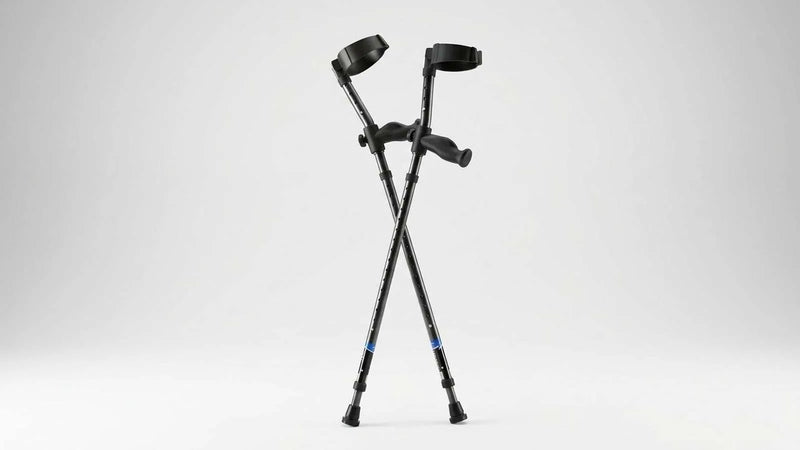
This guide explains what PPS is, when one crutch can help (and when two make more sense), how underarm and forearm crutches differ for long-term use, and how crutches.com now lets you buy a single in-Motion Pro Forearm crutch instead of a full set.
Key takeaways
- Post-polio syndrome is a group of new symptoms that can appear decades after polio, often 30 to 40 years later, including progressive weakness, pain, fatigue, and muscle atrophy (Mayo Clinic).
- There is no one treatment that fixes every PPS symptom. Care focuses on energy conservation, non-fatiguing physical therapy, and clinician-directed assistive devices (Mayo Clinic).
- A single underarm or forearm crutch can help unilateral weakness or pain when it improves gait symmetry. It is usually held on the side opposite the weak or painful leg, and a PT or physiatrist should decide (William M. DeMayo, MD, Polio Network).
- Wrong single-crutch use that worsens asymmetry can increase pain over time. Ask whether the device makes your gait more symmetric, not less.
- Millennial Medical / crutches.com now sells a Single in-Motion Pro Forearm Crutch in Tall or Short with Left or Right grip, so you do not have to buy a pair if you only need one.
In this guide
- What is post-polio syndrome?
- How can post-polio syndrome affect walking and balance?
- Do people with post-polio syndrome need one crutch or two?
- Underarm or forearm crutches for post-polio syndrome?
- Which single-crutch option can you buy online?
- How should a single crutch be fitted and used?
- What else helps besides crutches?
- FAQ
What is post-polio syndrome?
Post-polio syndrome is a group of potentially disabling signs and symptoms that appear decades after the initial polio illness. Mayo Clinic notes these signs and symptoms usually appear between 30 and 40 years after having polio.
PPS only affects people who had polio. Common signs and symptoms include:
- Muscle and joint weakness and pain that get worse over time
- Feeling easily fatigued and exhausted
- Losing muscle tissue (atrophy)
- Breathing or swallowing problems
- Sleep-related breathing disorders, such as sleep apnea
- Decreased tolerance of cold temperatures
Mayo Clinic describes PPS as progressing slowly in most people, with new symptoms followed by periods of stability. Risk can be higher after a more severe initial infection, after polio that began in adolescence or adulthood, after a greater recovery from the acute illness, and with frequent exercise to the point of exhaustion.
There is no specific test that confirms PPS. Diagnosis is based on history, exam, and ruling out other causes. Mayo Clinic lists three common indicators clinicians look for: a previous polio diagnosis, a long interval after recovery (typically at least 15 years), and gradual new weakness, often in muscles affected by the original illness.
How can post-polio syndrome affect walking and balance?
New leg weakness, joint pain, and fatigue can change how you walk. Mayo Clinic notes that weakness in the leg muscles makes it easier to lose your balance and fall, which can lead to fractures and other complications. Fatigue can be disabling even after very little activity. Chronic musculoskeletal pain is also common.
When one leg or hip is weaker or more painful than the other, people often shift their weight to compensate. That compensation can stress the back, the opposite hip, or the sacroiliac joints.
Physiatrist William M. DeMayo, MD, writing for the Polio Network, explains that unilateral weakness or pain can cause someone to shift their center of gravity over the painful or weak side, and that a single crutch on the opposite side can help stabilize the pelvis when used correctly.
Falls are a real concern. If walking feels less steady than it used to, talk with your clinician before you wait for a fall to force the issue.
Do people with post-polio syndrome need one crutch or two?
It depends on your pattern of weakness, pain, and balance. There is no one-size answer for every polio survivor.
When might one crutch be enough?
Dr. DeMayo notes that a single underarm (axillary) crutch or a single forearm (Lofstrand) crutch can substitute for unilateral weakness or help restore gait symmetry when there is hip or sacroiliac pain.
For many people with acute pain, temporary use of one crutch can make a dramatic difference. For polio survivors with unilateral weakness or unilateral arthritis from an asymmetric gait, a single crutch can also be a smart idea, if it improves symmetry.
A published case report in Physiotherapy Theory and Practice (Wise, 2006; PubMed 17118895) described a woman with PPS who used gait training with a single forearm crutch plus education and energy-conservation strategies.
At six and 18 months she remained compliant with the device, reported about 30% less fatigue, and walked with a more upright posture for longer distances in less time. That is one carefully supervised case, not a guarantee for everyone.
When are two crutches a better fit?
Dr. DeMayo is clear that two crutches are needed when you must fully unload one extremity, and when weakness is severe and bilateral. Use of one crutch is not a frequent recommendation in every clinic, and some clinicians prefer two when back and hip joints are already overloaded. Our guide on one crutch or two covers the general transition questions for any diagnosis.
What should you ask your PT or physiatrist?
Before you commit to one crutch long term, ask:
- Does this single crutch make my gait more symmetric or less symmetric?
- Do you see long-term downsides to one crutch instead of two for my pattern of weakness?
- Which side should hold the crutch, and how should I time weight through it with my steps?
Dr. DeMayo stresses that a single crutch that does not improve gait symmetry can lead to more pain and disability over time. The decision belongs with you and a clinician who understands polio biomechanics, ideally a physical therapist or physiatrist.
Underarm or forearm crutches for post-polio syndrome?
Both styles show up in PPS care. The better choice is the one your clinician fits to your arms, shoulders, balance, and daily routine.
Underarm (axillary) crutches
Underarm crutches place a padded cradle under the arm and put most of the load through your hands. Dr. DeMayo notes a single underarm crutch can help with unilateral weakness or pain when it restores symmetry.
If your clinician recommends one underarm crutch for one-sided weakness, follow their side and gait instructions. We sell in-Motion Pro Underarm Crutches as a pair online (2.2 lb each, 350 lb capacity, Short about 4'8" to 5'9", Tall about 5'10" to 7'1"). We do not currently list a single underarm SKU on the site.
Call (877) 753-5556 if you need help matching a one-sided underarm plan.
Forearm (Lofstrand) crutches
Forearm crutches use a cuff around the forearm and leave the hands freer between steps. Many people who use crutches for months or years prefer that style. Our What Are Lofstrand Crutches? guide covers the history and who they often suit, including people living with the late effects of polio. See also how to use forearm crutches and our best forearm crutches 2026 overview.
For long-term neurological conditions, forearm support is a common conversation. Our cerebral palsy forearm crutch guide is a peer long-term-condition article if you want another angle on daily use (different diagnosis, similar day-to-day themes).
If you are weighing a cane against crutches instead, start with cane or crutches and confirm with your clinician. A cane and a single crutch are not interchangeable for every gait problem.
Which single-crutch option can you buy online?
Many people with PPS only need one crutch when weakness or pain is mainly on one side. crutches.com now lets customers buy a single crutch instead of a full pair.
Our live single product is the Single in-Motion Pro Forearm Crutch - One Crutch Only. You choose Tall or Short and Left or Right for the ergonomic grip. Each order includes a free universal (round) handle, free shipping, HSA/FSA eligibility, and a 1-year parts and replacement warranty.
Specs match the Pro forearm pair: about 1.8 lb per crutch, 350 lb capacity, Tall about 5'3" to 6'8", Short about 4'2" to 5'5" by handle-height fit.
If you need a pair instead, see the in-Motion Pro Forearm Crutch set or the in-Motion Pro Underarm Crutch set. Questions about left vs. right, Tall vs. Short, or whether one crutch matches your clinician's plan: call (877) 753-5556.
How should a single crutch be fitted and used?
Fit first
A poorly fitted crutch fights your gait. Use our crutch sizing guide and the floor-to-hip measuring notes on the single forearm product page. Forearm sizing is by handle height, not overall height alone.
Which side?
For a single forearm crutch, Dr. DeMayo advises using it on the side opposite the problem, and bearing weight through the crutch at the same time as the weak or painful side. Your PT may demo this in the clinic. Do not guess from a blog if your instructions differ.
Gait pattern
Once you are cleared for a reciprocal pattern, a 2-point gait (crutch and opposite foot moving together) is a common single-device pattern. Practice on flat ground before stairs or uneven surfaces.
Energy, not heroics
Mayo Clinic's PPS treatment goals are comfort and independence, not pushing through exhaustion. Limit activities that cause pain or fatigue. Overdoing it on a good day can lead to several bad days. Cold increases muscle fatigue, so stay warm. Clear throw rugs and clutter to lower fall risk.
What else helps besides crutches?
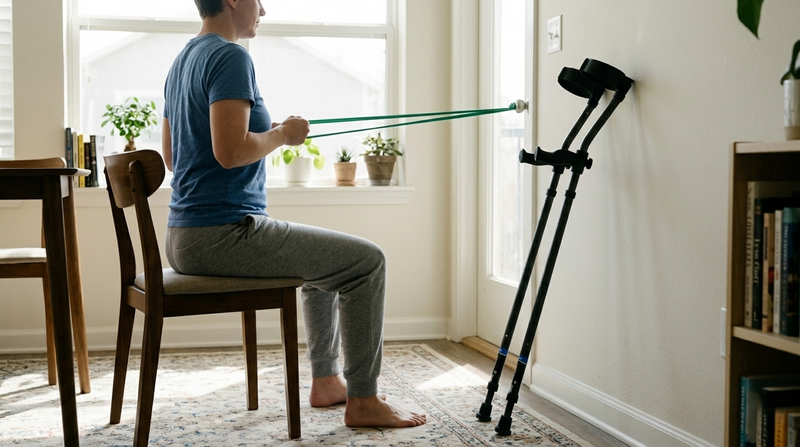
Mayo Clinic's treatment options for PPS include energy conservation (pacing and resting), physical therapy with non-fatiguing exercise such as swimming or water aerobics at a relaxed pace, speech therapy when swallowing is affected, sleep-disorder care, and pain medicines your doctor approves. Avoid exercising to the point of pain or fatigue.
Assistive devices are part of that energy-conservation toolkit when a clinician directs them. Your care team may recommend bracing, orthoses, or other mobility aids based on your exam. This article focuses on crutches. Follow your clinician for anything beyond that.
Support groups for people with PPS can help with the emotional side of dealing again with an illness you thought was behind you. Ask your doctor what is available near you. Our broader piece on why crutches matter for life's challenges touches on living with long-term mobility needs.
FAQ
Is a single crutch safe for post-polio syndrome?
It can be, when a PT or physiatrist confirms it improves your gait symmetry and balance. Dr. DeMayo notes that a single underarm or forearm crutch may help unilateral weakness or pain, and that a single crutch that worsens asymmetry can increase long-term pain. Get a hands-on gait check rather than copying someone else's setup.
Which side should hold the single crutch?
Often the side opposite the weak or painful leg, with weight through the crutch timed with that problem side. Confirm with your clinician. Do not reverse sides based on habit alone.
Can I buy just one crutch from crutches.com?
Yes. The Single in-Motion Pro Forearm Crutch is sold as one crutch only, with Tall/Short and Left/Right options. Underarm crutches are sold as pairs on the site today. Call (877) 753-5556 if your clinician wants a one-sided underarm plan and you need help.
Do crutches cure post-polio syndrome?
No. Mayo Clinic states there is no one treatment that fixes all PPS signs and symptoms. Crutches are tools to help you move with more stability and less wasted energy when your care team includes them in the plan.
Should I keep using two crutches if one side is stronger?
Maybe. Bilateral weakness, a need to fully unload a limb, or a gait that gets worse with one device are reasons to stay on two. Reassess with your clinician if fatigue, pain, or falls change.
Related guides
- One Crutch or Two?
- What Are Lofstrand Crutches?
- How to Use Forearm Crutches
- Cane or Crutches?
- Crutch Sizing Guide
- Best Forearm Crutches 2026
- 2-Point Gait on Crutches
- Walking Through Life's Challenges
- Crutches and Cerebral Palsy: Forearm Crutch Guide
Sources: Mayo Clinic, Post-polio syndrome symptoms and causes and diagnosis and treatment; William M. DeMayo, MD, Is A Single Crutch a Good Idea?, Polio Network; Holly H. Wise, Effective intervention strategies for management of impaired posture and fatigue with post-polio syndrome: a case report, Physiother Theory Pract. 2006; PubMed 17118895.
Product details are from crutches.com product pages as of November 5, 2026. This article features no affiliate products.
About the author
The in-Motion Team is the crew behind Millennial Medical. We're the people behind in-Motion crutches, and we write these guides to help you move with more comfort and confidence.
This article is for general information only and is not medical advice. Post-polio syndrome care belongs with your doctor, physical therapist, or physiatrist. Do not change your mobility devices or exercise plan without their guidance, and seek care for new falls, sudden weakness, breathing trouble, or rapidly worsening symptoms.