Resource Center
crutch technique.
7 articles
-
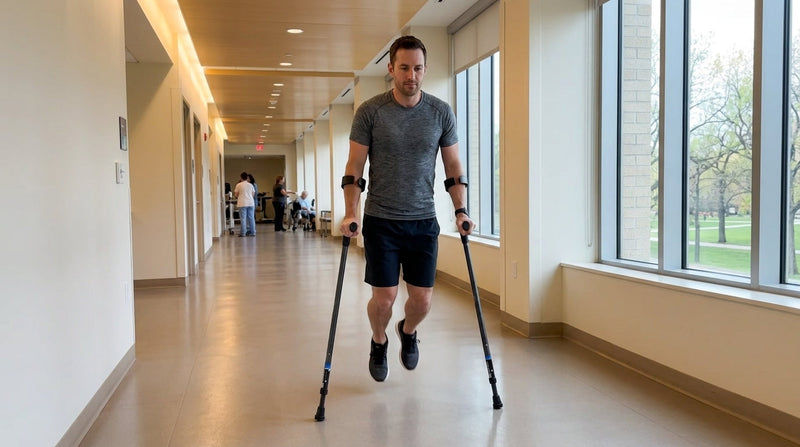 Swing-To and Swing-Through Gaits: The Fastest Crutch Patterns, and the Hardest
Swing-to and swing-through gait explained: who needs each one, how they differ, and why upper body strength decides whether either is sustainable.
-
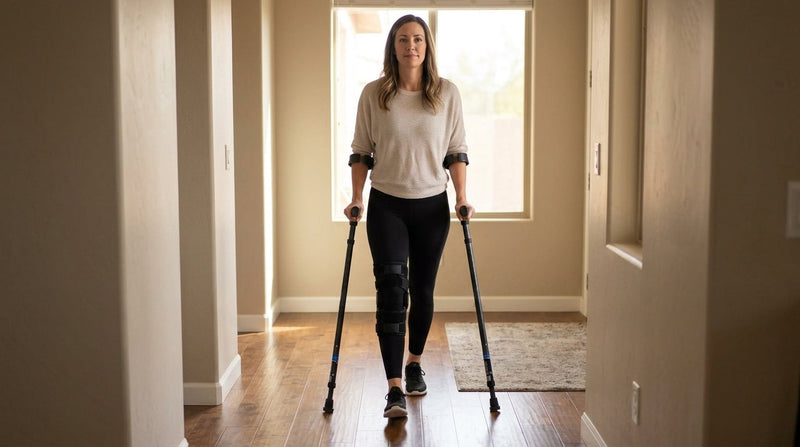 2-Point Gait on Crutches: The Transition That Means You Are Getting Better
The 2-point crutch gait mirrors normal walking and signals real progress. The sequence, how to know you are ready, and why rushing...
-
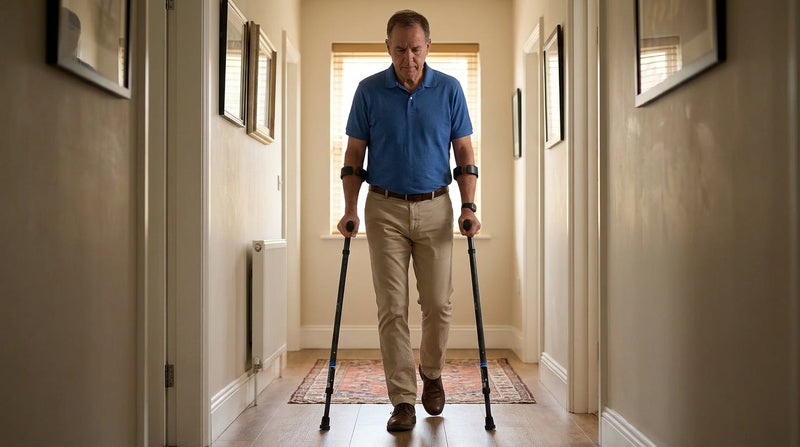 4-Point Gait on Crutches: The Slowest Pattern, and When It Is the Right One
The 4-point crutch gait keeps three points on the ground at all times. The sequence, who actually needs it, and why it...
-
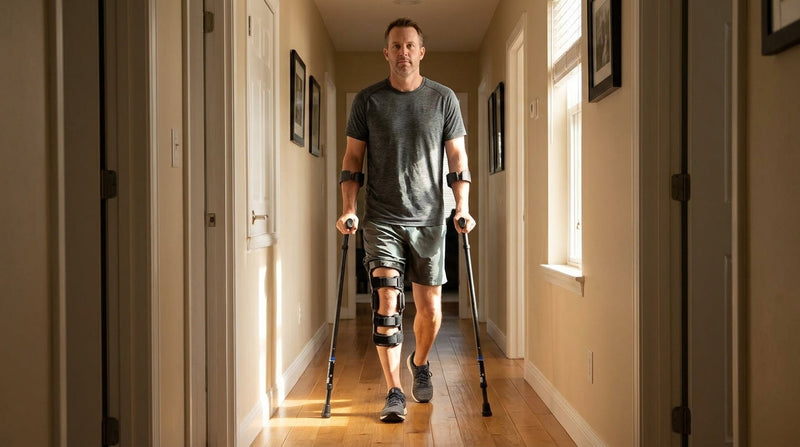 3-Point Gait on Crutches: How It Works and What Most Patients Get Wrong
The 3-point crutch gait explained: how the crutches and your injured leg move as one unit, what your weight-bearing orders mean, and...
-
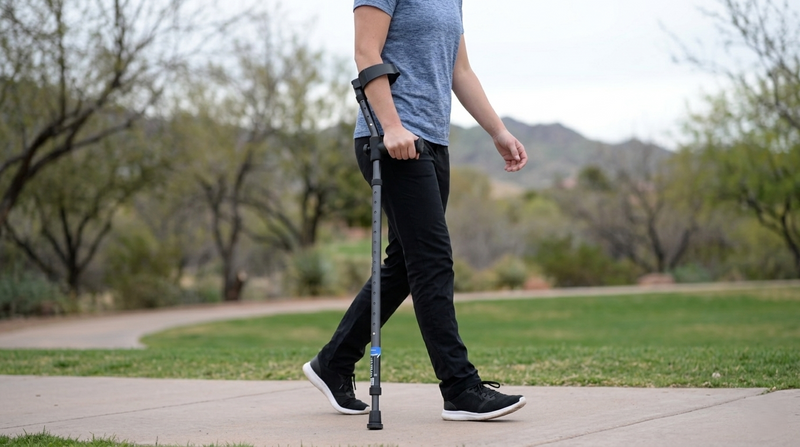 One Crutch or Two? Knowing When and How to Transition
Wondering if you still need both crutches? How weight-bearing status decides one crutch vs two, which hand to use, and how to...
-
 Stairs, Curbs & Uneven Terrain: Real-World Crutch Skills
Stairs, Curbs, and Uneven Terrain: Real-World Crutch Skills Most patients learn to use crutches in a hospital corridor or a PT clinic....
Built for the long haul
Crutches that don't hurt
A spring-assisted post absorbs every step, and the grips keep your wrists neutral. Your hands and shoulders won't be the next thing that hurts.

-
 Crutch Fitting for PTs: 7 Common Mistakes That Slow Patient Recovery
Most patients leave their first PT appointment with crutches that don't fit right. That's not usually the therapist's fault, fittings happen fast,...


