If you're on crutches for weeks or months, the pair you choose matters more than almost anything else about your recovery. The wrong crutches can leave you with sore wrists, tired shoulders, and aching underarms. The right ones help you move longer with less fatigue.
This guide covers what to look for in the best crutches for long-term use: what causes fatigue, the features that actually help, how to get the fit right, and how to keep your crutches working day after day.
Why standard crutches wear you out over time
Most crutches are designed for short-term use. That's fine for a few days. Over weeks or months, small problems add up.
- Wrist pain. Straight grips can bend your wrist at an awkward angle with every step.
- Shoulder and elbow fatigue. Rigid posts send the impact of each step up through your arms.
- Underarm soreness. Pressure from the underarm pad can build up, especially if the height is off.
- Slipping. Fixed rubber tips can tilt and lose grip on uneven ground.
What to look for in crutches for long-term use
1. Ergonomic, left- and right-specific grips
Look for contoured grips shaped for each hand and angled to keep your wrist in a natural position. This reduces the wrist "kinking" that leads to wrist pain and nerve strain.
2. Shock absorption
A spring in the lower post absorbs the impact of each step. On a long recovery, that can mean noticeably less strain on your wrists, elbows, and shoulders.
3. Articulating tips
Articulating tips pivot to stay in full contact with the ground at different angles. That gives you better footing on hardwood, carpet, grass, gravel, and uneven outdoor terrain, where fixed rubber tips tend to slip.
4. Real adjustability
Your crutches should adjust to your height and arm length, with the hand grip adjustable on its own. A poor fit forces awkward posture, and awkward posture causes fatigue.
5. Comfortable padding
Foam padding at the underarm helps reduce pressure and soreness. Remember that your weight belongs on your hands, not your armpits.
6. Durable construction
Cheap crutches can bend, squeak, and wear out with daily use. Look for a solid frame, a clear weight capacity, reinforced joints, and replaceable tips and grips so you can keep a good pair going.
7. Easy to live with
If you'll use crutches every day, they need to fit your life. Features like folding for travel and a clean, modern look make a real difference over months of use.
How in-Motion Pro crutches are built for extended use
The in-Motion Pro crutches address each of the problems above. Here's what you get, straight from our product pages.
in-Motion Pro Underarm Crutches
- Contoured left/right hand grips angled to keep your wrist in its natural position
- A spring in the lower post that absorbs the impact of each step, with a firm, controlled feel
- Sure Foot articulating tips for hardwood, carpet, grass, gravel, and uneven terrain
- Foam padding at the underarm cradle
- Folds in half for travel without changing your height settings
- 2.2 lbs per crutch, 350 lb weight capacity
- Short (53" or shorter from floor to underarm) and Tall (53.5" or taller) sizes. The underarm cradle adjusts across 11 positions (Short) or 15 (Tall), and the hand grip adjusts separately at 4 or 5 positions.
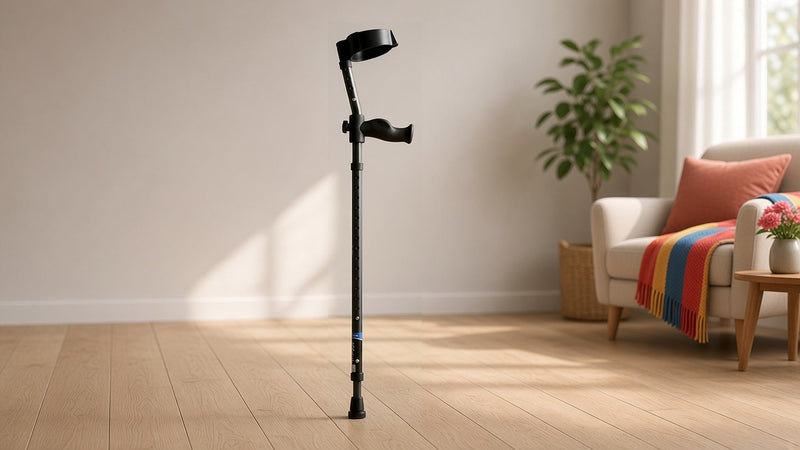
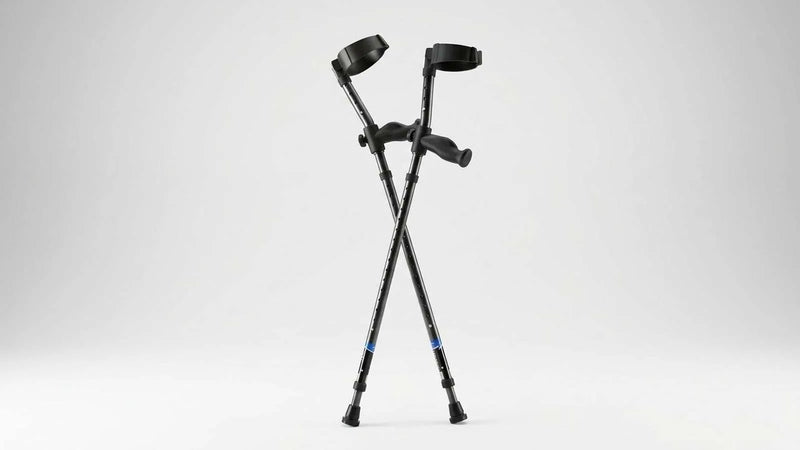
in-Motion Pro Forearm Crutches
- Patented spring-assist shock absorption in the lower post
- Contoured left/right ergonomic grips
- Two forearm cuff sizes (standard and large) in every box
- Sure-Foot articulating tips
- 1.8 lbs per crutch, 350 lb weight capacity
- Short (4'2" to 5'5") and Tall (5'3" to 6'8") sizes
Prefer firm support without a spring? Both models also come in a rigid post version, like our in-Motion Pro Underarm Crutches (Rigid Post). Not sure which style is right for you? Read should I use underarm or forearm crutches.
Get the fit right
Even the best crutches cause fatigue if they don't fit.
- Measure in the shoes you'll usually wear.
- For underarm crutches, AAOS OrthoInfo says the top should sit about 1 to 2 inches below your armpits, the handgrips should be even with the top of your hip line, and your elbows should be slightly bent.
- For forearm crutches, sizing is based on handle height, measured from the floor to your hip.
Our crutch sizing guide walks you through it in three steps.
Habits that reduce fatigue
- Keep your weight on your hands, not your underarms.
- Stand tall and look ahead, not down at your feet.
- Take shorter steps, especially on slick or uneven ground.
- Rest before you're exhausted, since tired arms make it harder to stay steady.
- Check tips, grips, and pads regularly and replace worn parts.
For more, see preventing shoulder and wrist pain while using crutches and hand and palm pain from crutches.
What our customers say
"I've used crutches for years. In Motion Crutches are the first pair that didn't leave me sore or embarrassed." Colleen M.
"They're sleek, quiet, and comfortable. I actually get compliments on my crutches." Jamal R.
FAQ
What are the best crutches for long-term use?
Look for ergonomic left/right grips, shock absorption, articulating tips, real adjustability, and durable construction. Our in-Motion Pro Underarm and Forearm Crutches were designed with all of these in mind.
Are forearm or underarm crutches better for long-term use?
Many people who use crutches long term choose forearm crutches, but the right choice depends on your strength, balance, and condition. Ask your doctor or physical therapist which style suits you.
How do I avoid fatigue on crutches?
Get a proper fit, choose crutches with shock absorption and ergonomic grips, keep your weight on your hands, and take regular breaks.
Do spring-loaded crutches help?
A spring in the lower post absorbs some of the impact of each step, which can reduce strain on your arms and shoulders over a long recovery. If you prefer firm, predictable support, a rigid post is an option.
When should I replace crutch tips, grips, or pads?
Replace them when they look worn, cracked, or flattened, or when they stop gripping well. Read when to change your mobility aid for more signs it's time for an upgrade.
Ready to upgrade?
If you're looking for the best crutches for long-term use, don't settle for standard. Shop in-Motion crutches, and find tips, pads, and grips in our accessories.
Learn more about the in-Motion Affiliate Program.
Be kind. Be generous. Always pay it forward.
Support for Life's Adventures
This article is for general information only and isn't medical advice. Talk with your doctor or physical therapist about which crutches and walking technique are right for you.